The space beneath a bed can help a small bedroom feel less crowded, but only if the storage fits the room and remains easy to use. A bin that slides under the frame yet cannot clear a bed leg is frustrating. So is a storage bag filled with things you no longer need.
Begin with a specific job for the space. Seasonal bedding, a modest rotation of clothing, or an occasional-use linen set can make sense. You do not need to turn the entire floor beneath the bed into a tightly packed second closet.
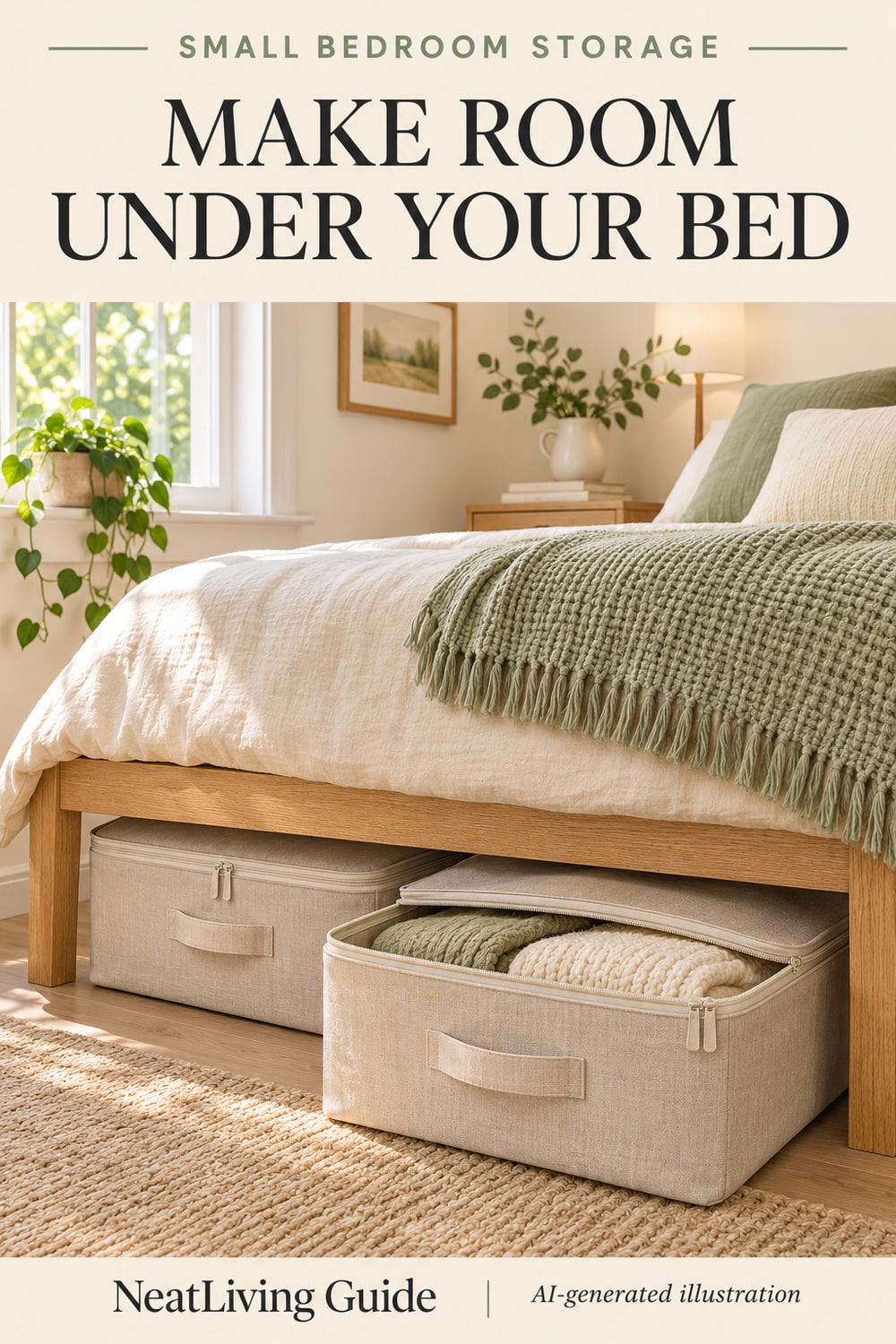
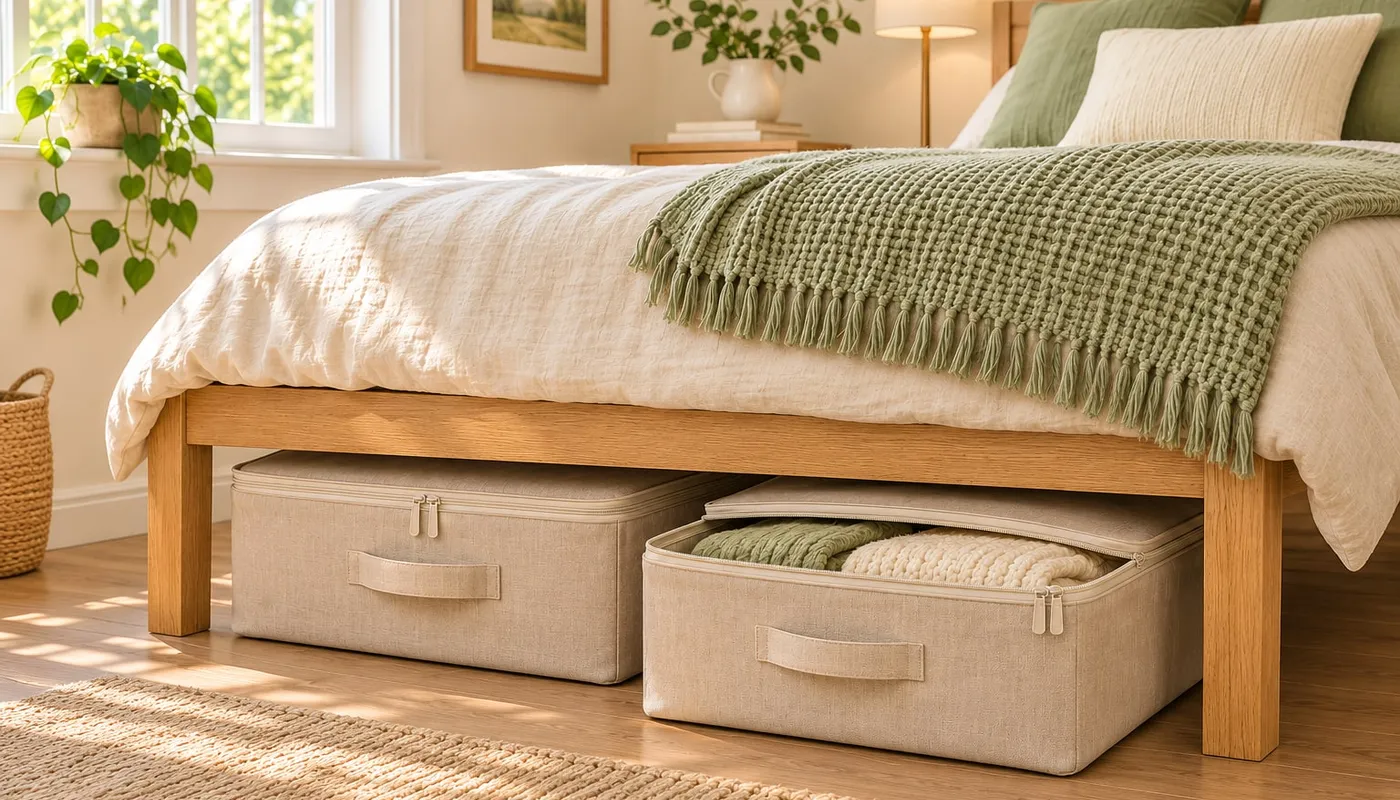
The image above is AI-generated organization inspiration. It shows generic storage, not an exact item available through the shopping links below.
Measure the full route before choosing a container
Measure from the floor to the lowest obstruction beneath the bed. That obstruction might be a rail, a center support, a fastening bracket, or the underside of a drawer. The height at the edge of the bed may be greater than the usable height farther inside.
Next measure the space between the legs and supports. Consider where you will pull a container out. A wide box may fit beneath the frame but fail to pass through the gap between the legs.
Finally, check the floor beside the bed. A nightstand, a rug edge, or a narrow walkway can prevent a drawer or bin from sliding out far enough to open.
An example clearance check
If your narrowest opening measures 7 inches high, do not assume that a container described as 7 inches high will be comfortable to use. A bulging lid, wheels, handles, or a bed skirt may need extra room.
Make a paper footprint or test an empty box before buying. Use the outside dimensions of the fully assembled container, and leave room for your fingers. The right margin depends on your frame and the object you are storing; a nominal measurement is not a fit guarantee.
Decide what belongs under the bed
Choose one or two categories instead of a miscellaneous collection. A clearly defined category makes it easier to find items and notice when the space has reached its capacity.
Possible uses include:
- Clean, dry bedding used in another season.
- A small group of occasional-use linens.
- Clothing you are keeping for the next season.
- Accessories that can be stored according to their care instructions.
Avoid putting frequently needed essentials in a position that requires lifting the bed or moving heavy furniture. If you need an item every morning, a convenient drawer may serve you better.
Follow the care instructions for the items and the storage container. Do not seal damp textiles into a bag or treat a container as a fix for an existing moisture problem.
Compare three under-bed storage approaches
Soft zippered storage bags
A soft bag can be useful for compressible bedding or clothing, especially when a rigid box would be awkward to handle. The absence of a hard frame can also make it easier to store the bag when it is empty.
The trade-off is structure. A bag can bulge above its stated height when filled, and handles may not be designed for a heavy load. Keep the contents manageable, avoid dragging delicate fabric across a rough floor, and read the manufacturer’s capacity and handling instructions.
A clear viewing panel may help you recognize the contents, but a large plain label is often enough. Do not select a bag only because it resembles the styling in a photograph.
Rigid lidded boxes
A rigid container can make the usable shape easier to predict. It may suit a defined set of small items or contents that you want to separate from nearby fabric.
Check whether the lid opens while the box is under the bed or whether the box must be removed completely. Also check the outside height with the lid attached. A long box that needs a great deal of open floor space may be inconvenient in a narrow room.
Do not assume a rigid lid makes a container airtight, waterproof, pest-proof, or suitable for every material. Confirm the actual product’s specifications.
Rolling bins and drawers
Wheels can make a suitable loaded container easier to move, but they add height and change how it behaves on the floor. A low carpet, deep carpet, a rug edge, and a hard floor can produce different results.
Check the complete assembled dimensions, wheel clearance, and opening path. Consider whether the container has stops or another appropriate way to prevent it from rolling farther than intended. Follow the manufacturer’s loading instructions.
Rolling storage is most helpful when it removes an actual handling problem. If a lightweight bag already moves comfortably, wheels may not add much value.
Keep one category in each container
Put a complete useful set together. For example, keep a spare sheet set and its pillowcases in one container rather than splitting them between several boxes.
Avoid filling every remaining corner with an unrelated object. A half-empty container with a clear purpose can be easier to maintain than a full container whose contents require a detailed inventory.
Before adding storage, check whether your kitchen cupboards or another closet has become a landing place for things that belong elsewhere. Moving unused objects from one crowded space to another does not solve the underlying problem.
Label from the direction you will look
Place the label on the side that faces the room. Keep it brief: “Winter bedding,” “Guest linens,” or “Next-season clothing.”
If a bed skirt covers the label, consider a simple inventory note kept somewhere accessible. Use broad categories that another household member can understand.
When the contents change, update the label immediately. An old label is often less useful than no label because it sends you searching in the wrong place.
Leave room for cleaning and inspection
Keep containers removable. You should be able to check the area beneath the bed and clean it without dismantling a storage system.
Avoid wedging bags tightly around structural supports, cords, vents, or equipment. Leave appropriate access and follow the bed manufacturer’s guidance.
During an ordinary cleaning session, look for dust, damaged containers, or changes in the room’s conditions. If something is damp or damaged, address the cause before returning the contents.
A manageable first-week plan
Start with one container, not a full matching set. Choose its purpose, measure the route, and test how easy it is to remove and return.
Use the arrangement for several days. Can you reach the handle? Does the lid catch? Does the container stay closed without forcing it? Can another person identify the contents?
Only add another container after the first one works. If the system is awkward, try a different position or store fewer items before buying more organizers.
For another example of planning around fixed obstacles, see our under-sink storage guide. The same principle applies: work around the structure and leave important access clear.
Browse storage categories on Amazon US
The links below open category searches on Amazon.com. Results can contain different brands, sizes, and materials, so compare the actual listings with your measurements. These are storage approaches to consider, not tested product rankings. The generated illustration does not represent a specific listing.
Zippered under-bed storage bags
A flexible category to compare for clean seasonal clothing and spare bedding when a modest, lightweight load is easy to remove.
Check before buying: Filled height, handle construction, material care, closure, and the route past bed legs. Do not assume a soft bag remains flat when full.
Search Amazon US for zippered under-bed storage bagsRigid under-bed storage boxes
A more structured option when you want a defined shape and a removable lid for a clearly labeled category.
Check before buying: Outside dimensions including the lid, opening clearance, and the product's actual protection and loading specifications.
Search Amazon US for rigid under-bed storage boxesRolling under-bed storage bins
An option to investigate when moving a suitable loaded container is the main obstacle to using the space.
Check before buying: Complete height with wheels, flooring compatibility, opening path, load limit, and any manufacturer-required stops or assembly.
Search Amazon US for rolling under-bed storage binsFrequently asked questions
Should every inch beneath a bed be used?
No. Choose the storage you can reach and maintain. Space for cleaning, access, and simple handling is part of a useful system.
Can I use the same container for clothes and bedding?
You can group compatible clean, dry items if their care instructions allow the storage conditions. A defined category is usually easier to find than a mixture that changes each week.
What if I do not have enough bed clearance?
Choose another suitable storage location rather than forcing a container under the frame or modifying the bed without appropriate instructions. A smaller wardrobe edit or drawer reset may be more practical. Our small-space living section collects related ideas.
Keep a little inspiration
Save this guide for later.
Make a note of the ideas you want to try next.
Save to Pinterest (opens in a new tab)